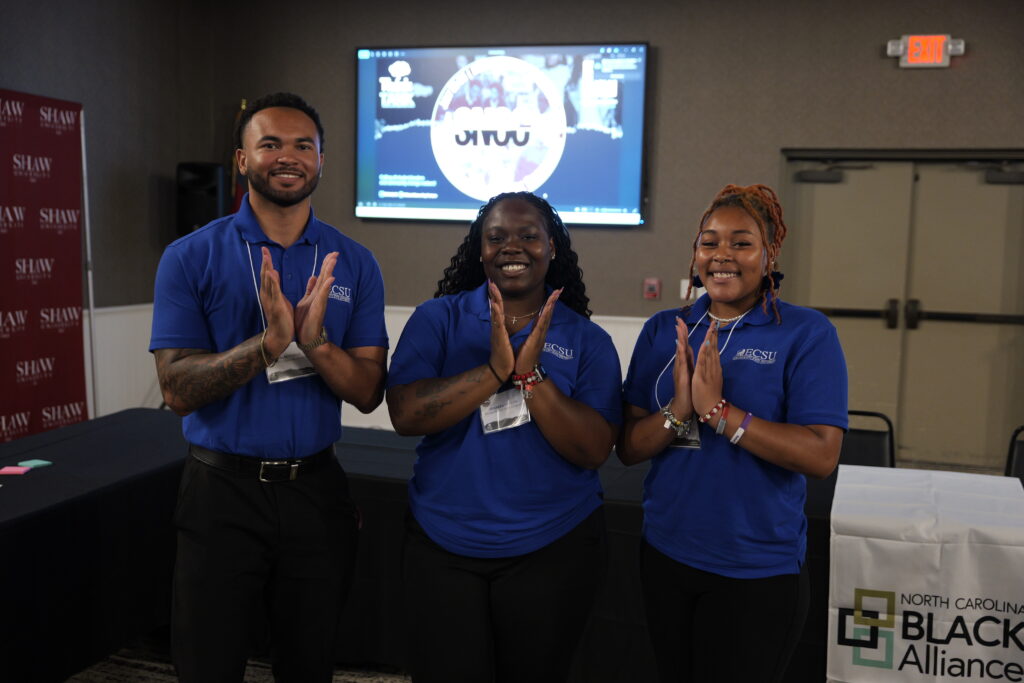
Elizabeth City, N.C. — Four Elizabeth City State University (ECSU) students stepped into a movement rooted in history and walked away with a sharper understanding of their own power to shape what comes next. Jaharah Yahaya, Janiah Owens, Malachi Bass and Nyla Phillips represented ECSU at the 12th Annual North Carolina Black Alliance Think Tank, held July 26-28 at Shaw University and N.C. State University. They joined 36 young adults from nine North Carolina colleges and community participants out of state for three days focused on civic engagement, leadership and turning their voices into meaningful change.
For Yahaya, ECSU’s 74th Student Government Association president and Gilman Scholar, the three-day experience was both a return and a revelation.
“This was actually my second year attending. It made the experience even more meaningful because I was able to return with a different perspective and a deeper understanding of my own leadership position,” Yahaya said.
The Think Tank began as a space for students attending North Carolina’s historically Black colleges and universities (HBCUs) to gather, examine issues affecting Black communities, and develop possible solutions. Participants ranged in age from 18 to 31 and arrived with varying levels of civic involvement and political knowledge. This year marked an expansion of that mission, with students from predominantly white institutions and community members up to age 35 invited to participate. An exit survey showed participants left with a greater understanding of how voting can affect their lived experiences.
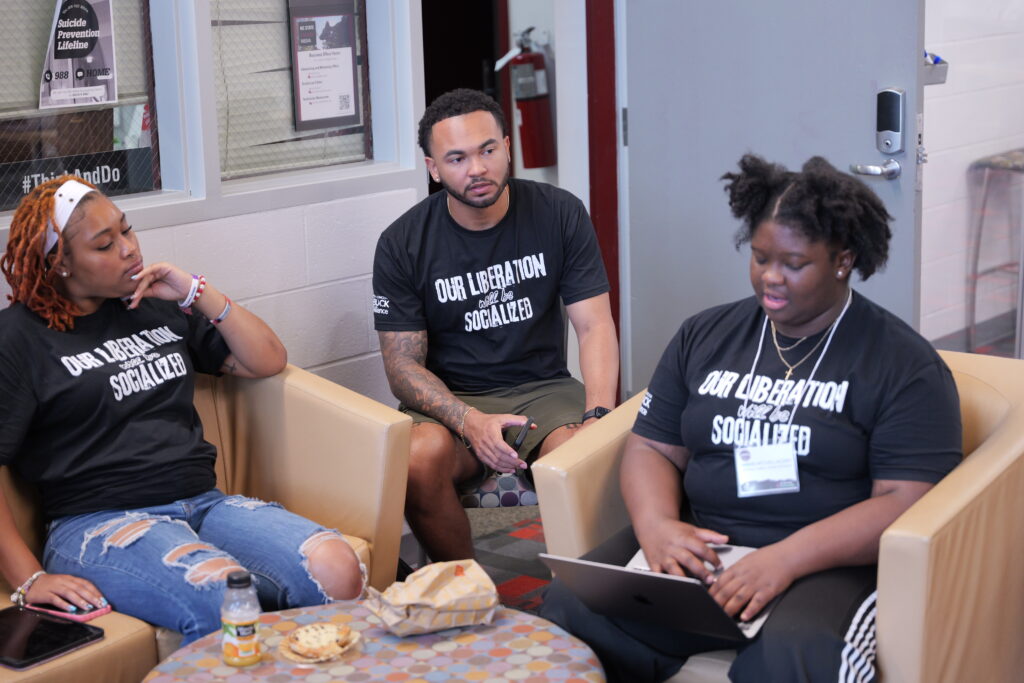
Yahaya said the experience stretched beyond workshops and conversations.
“I would describe the HBCU Think Tank as three days of learning, reflection, community and empowerment that reminded me that we are the freedom we fight for, and that liberation starts with us,” she said.
According to Yahaya, one of the most thought-provoking lessons centered on something students may not always recognize they possess: power.
“One of the biggest things that challenged my thinking was learning more about power and how we identify and use the influence we already have within our communities,” Yahaya said. “Through power mapping, I began thinking more intentionally about who holds power, how decisions are made, and how students can organize to create meaningful change rather than waiting for someone else to create it for us.”
That conversation carried particular significance at the Think Tank’s first stop, Shaw University, where civil rights organizer Ella Baker helped establish the Student Nonviolent Coordinating Committee (SNCC) in 1960.
Participants examined SNCC’s history and met virtually with veteran SNCC organizer Courtland Cox as they explored groundwork for what organizers describe as a neo-SNCC movement—one that draws lessons from the youth-led organizing of the civil rights era while addressing issues facing communities today.
The historical connection gave Yahaya a new lens through which to view her own leadership.
“Because this was my second year attending, I already knew the Think Tank would be an impactful experience,” she said. “However, I did not expect to leave with such a renewed perspective on leadership and my responsibility to my community. This year allowed me to connect what I was learning about leaders like Ella Baker and the work of SNCC to the leadership roles I currently hold and the type of leader I want to continue becoming.”
Discussions also placed contemporary public policy in the context of community impact. Participants examined issues including recently passed North Carolina legislation affecting diversity, equity and inclusion initiatives in state government, public higher education and K-12 education.
But the Think Tank was not simply about understanding issues. It challenged participants to consider what they could do with that understanding.
Yahaya said opportunities that bring young people together across campuses are important because students should not have to wait until after graduation to see themselves as leaders.
“Opportunities like the HBCU Think Tank matter because college students need spaces where we can learn about our history, build relationships with students from other institutions, and understand the power of our voices,” she said. “We are not only preparing to become future leaders; many of us are already leading our campuses and in our communities.”
The three days also allowed Yahaya and her fellow Vikings to carry ECSU into conversations with students from across the state.
“I am always proud to talk about ECSU,” Yahaya said. “Being surrounded by students from other HBCUs allowed me to share some of the work happening at ECSU while also learning about what students are doing on their campuses. Those conversations reminded me that although each HBCU has its own culture and experiences, we share many of the same goals when it comes to uplifting our campuses and communities.”
For Yahaya, the experience did not end when the Think Tank did. She said the North Carolina Black Alliance HBCU Think Tank continues to provide a space she values—where learning about the leadership of the past can help students recognize their responsibility in the present.