

Build Resilient Communities. Lead in Times of Crisis.
Program Overview
The Emergency Management (EM) Program equips students with the knowledge and skills needed to manage disasters at the local, state, and federal levels. You’ll learn how to lead through crisis—before, during, and after it happens.
This program focuses on strategies that help communities:
- Prevent disasters
- Prepare for emergencies
- Mitigate risks
- Respond effectively
- Recover and rebuild
Disaster management is a diverse and evolving field, and ECSU prepares you to step into it with confidence by combining theory, technology, and real-world application.
Customize Your Path
One of the strengths of this program is its flexibility. Many students enhance their degree with complementary minors, including:
Aviation
Understanding Aviation principles can help emergency managers coordinate airborne resources during disaster response, including aerial firefighting, search and rescue missions, and the delivery of supplies. Aviation skills can aid in coordinating air traffic control during disaster situations, ensuring safe operations for both commercial and emergency flights.
Unmanned Aerial Systems (UAS)
Integrating UAS and EM enhances community resilience and optimizes response strategies during disasters. Additionally, UAS can be very effective in conducting aerial surveys to capture images and videos of disaster zones, helping to assess damage or debris, and prioritize response efforts.
Biology
A background in Biology equips students with knowledge about restoring ecosystems after a disaster, the environmental impacts of trees and other debris compromising river basins, and public health concerns about natural disasters and biological hazards such as the Covid 19 pandemic.
Business Management
EM has a strong Business Management component, budgeting for logistics and efficient resource distribution. Strategic Planning skills can aid in formulating long-term plans for disaster preparedness and recovery. Understanding business continuity helps organizations remain operational during and after a disaster.
Technology & Data Science
Technology equips students with essential skills in information technology, data analytics, and modern communication systems, which are vital for effective emergency management. Data Science provides analytical tools and methodologies that are essential in interpreting large datasets relevant to disaster management. Data Science techniques can enhance GIS applications for mapping risk areas such as flood zones. These skills can help forecast potential disaster impacts and develop effective mitigation strategies, leading to informed decision-making.
Engineering
Engineering equips students with knowledge about innovative technologies that can be utilized in emergency management, such as smart sensors, construction materials, and construction methodologies for durable infrastructure. Students learn to evaluate the structural integrity of existing infrastructure in disaster-prone areas, guiding modifications or reinforcements necessary for enhanced resilience.
Social Work
Social Work offers community resilience by focusing on human behavior and community dynamics, emphasizing the importance of social structures in managing crises. Training in Social Work equips students with skills to support mental health and emotional well-being during and after disasters.
Program Options
Minor:
Certificates:
- Emergency Management Athletic Facilities
- Emergency Management Natural Disasters (Online)
Phases of Emergency Management
Emergency management is more than response—it’s a full-cycle approach to protecting communities:
Prevention
Strategies to avert disasters.
Preparedness
Planning and training for potential emergencies.
Mitigation
Reducing disaster impact
Response
Immediate actions taken during a disaster.
Recovery
Processes for returning to normal post-disaster.
Hands-On Learning Experience
This program goes beyond the classroom.
Students gain real-world experience through:
- Hazardous materials training
- Radiological monitoring exercises
- Disaster simulations and drills
- Hands-on equipment use
You won’t just study emergencies—you’ll train for them.

Student Opportunities
Student Organizations
A nationally recognized, award-winning program where students:
– Train in fire safety and search & rescue
– Practice disaster medical operations
– Gain real-world emergency response experience
A global organization focused on:
– Saving lives and protecting property
– Professional certification (AEM & CEM)
– Career advancement in emergency management
Honor Societies
- Order of the Sword and the Shield (OSS)
Focused on homeland security and protective disciplines - Epsilon Pi Phi (EPP)
The first nationally recognized Emergency Management honor society
Professional Associations
Students can connect with leading organizations such as:
- Association of Healthcare Emergency Preparedness Professionals (AHEPP)
- Black Emergency Managers Association (BEMA)
- International Association of Emergency Managers (IAEM)
- National Emergency Management Association (NEMA)
- U.S. First Responders Association (USFRA)
Hotel Support Company
1st Battalion, 77th Armored Regiment
3rd Armored Brigade Combat Team
1st Armored Division
Based at Fort Bliss
El Paso, Texas
USCG, Guam


Research Opportunities
Students participate in impactful research, including:
- Airport disruption studies
- Travel to national research conferences
- Collaboration with the Federal Aviation Administration (FAA)
These experiences give you exposure to real-world challenges and industry leaders.
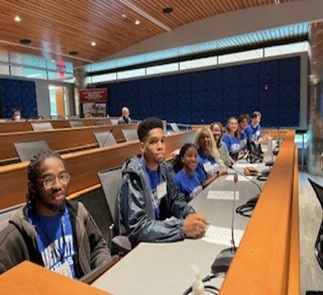
Career and Graduate Pathways
Your Future in Emergency Management
Graduates are prepared for careers in:
- Emergency management agencies
- Homeland security
- Disaster response organizations
- Public safety and government
- Environmental and risk analysis
If you’re driven to lead, protect, and serve communities, this program positions you to make a real impact.
Program Leadership
Department Chair and Assistant Professor, Department of Aviation and Emergency Management | STEM Complex, Campus Box 851
kdkupietz@ecsu.edu | 252-335-3971
Program Coordinator and Assistant Professor, Emergency Management
dhendersonbell@ecsu.edu | 252-335-8718
Take the Next Step
We’re here to support you from your first step to graduation.